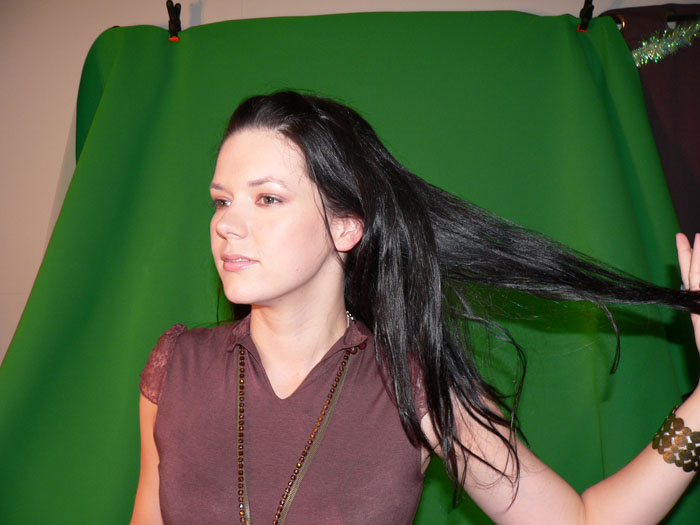
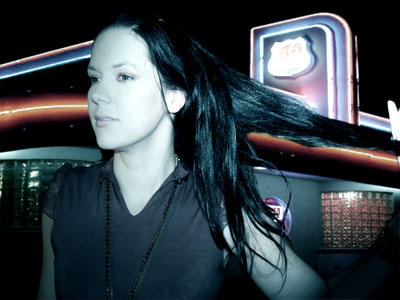
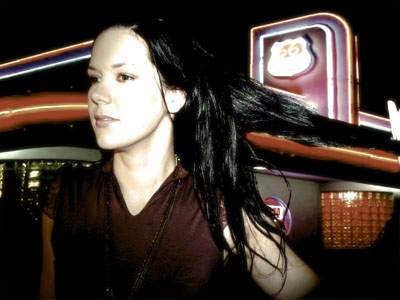
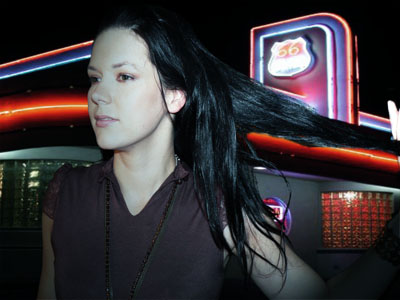
| Here are some of the first tests for the short film. The idea is to find the colour grade of the film. Here we have our lead actress Elizabeth. The shot was taken on a Panasonic DMC FZ20 sill camera. The Green screen was just put up fresh out of the box. I had it shipped express from WWW.EEFX.COM from the United States to AUSTRALIA. I got Liz to lift her hair out a little just to test the keying system I'm using. One of the most exciting things about this short film is the use of the green screen. A lot of in the car shots will be done in studio. Well be shooting day to night, which means exactly that. The scene will be shot in the day light and in the computer will be converted to night. The images below show the end result of the color grade testing. The picture in the center might be the one I use but its way too early to tell. I still want to have all the effects done and principle photography finished before choosing the overall look of the film when done. |
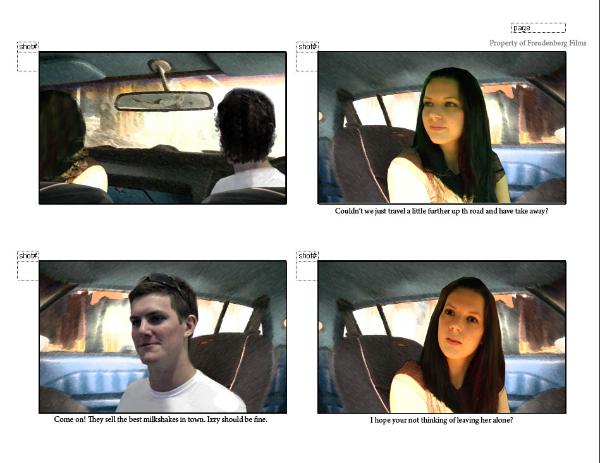
| The art of story boarding There are many types of story board styles. From sketches to full blown animatics. Story boards are used to help with the general motion of the story. When you have a story board on set everything has been thought out so you can spend your time on set in a productive manner. Most of all story boards save you money on For the short film we use still images and set peaces. The story board below is made of the stills of the actors. They are then moved around into different posses to help frame the shot sequence. I find this to be a quick way to flesh out the cuts. |
| Here we have the basic steps of putting together the story board. |
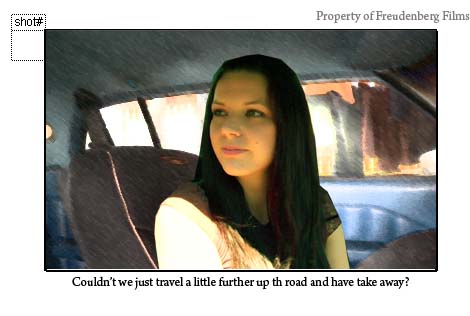
| 1. Starting off with the basic template. |
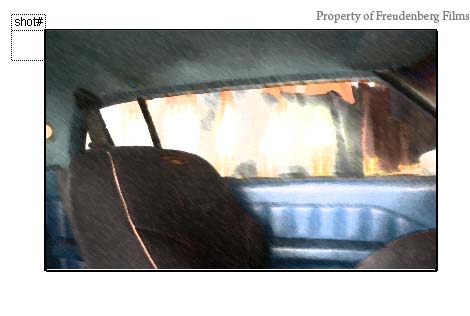
| 2. A background is inserted. This is a still picture from inside a car. |
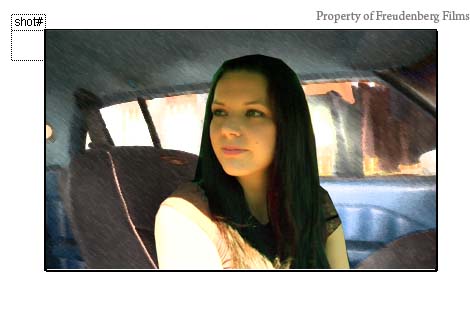
| 3. The actor is then inserted. |
| 4. Finally the dialog is entered |
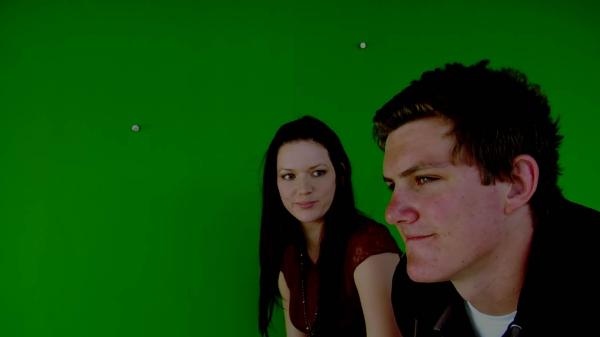
Green screen shot showing two key actors and tracking markers. The silver tracking markers
are used to capture tracking data.
are used to capture tracking data.
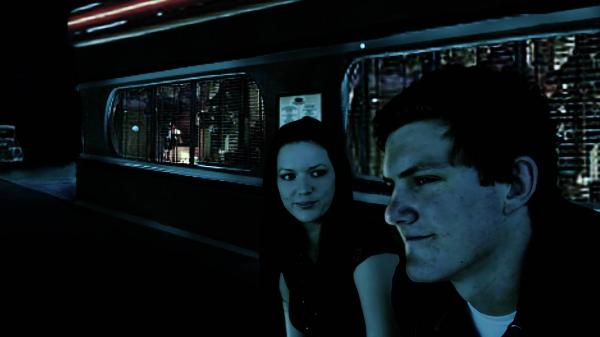
| Same shot with colour grading and back ground elements added. |
